

AURORA Project Final Results
AURORA has delivered a comprehensive suite of technological, scientific, and operational solutions designed to strengthen the protection, monitoring, and management of cultural heritage. Over three years of interdisciplinary collaboration, the consortium developed innovative chemical markers, advanced IoT tracking systems, a blockchain‑based digital identity platform, and robust assessment tools, all validated through real‑world applications in museums and heritage sites.
Chemical Markers & Photoluminescent Inks
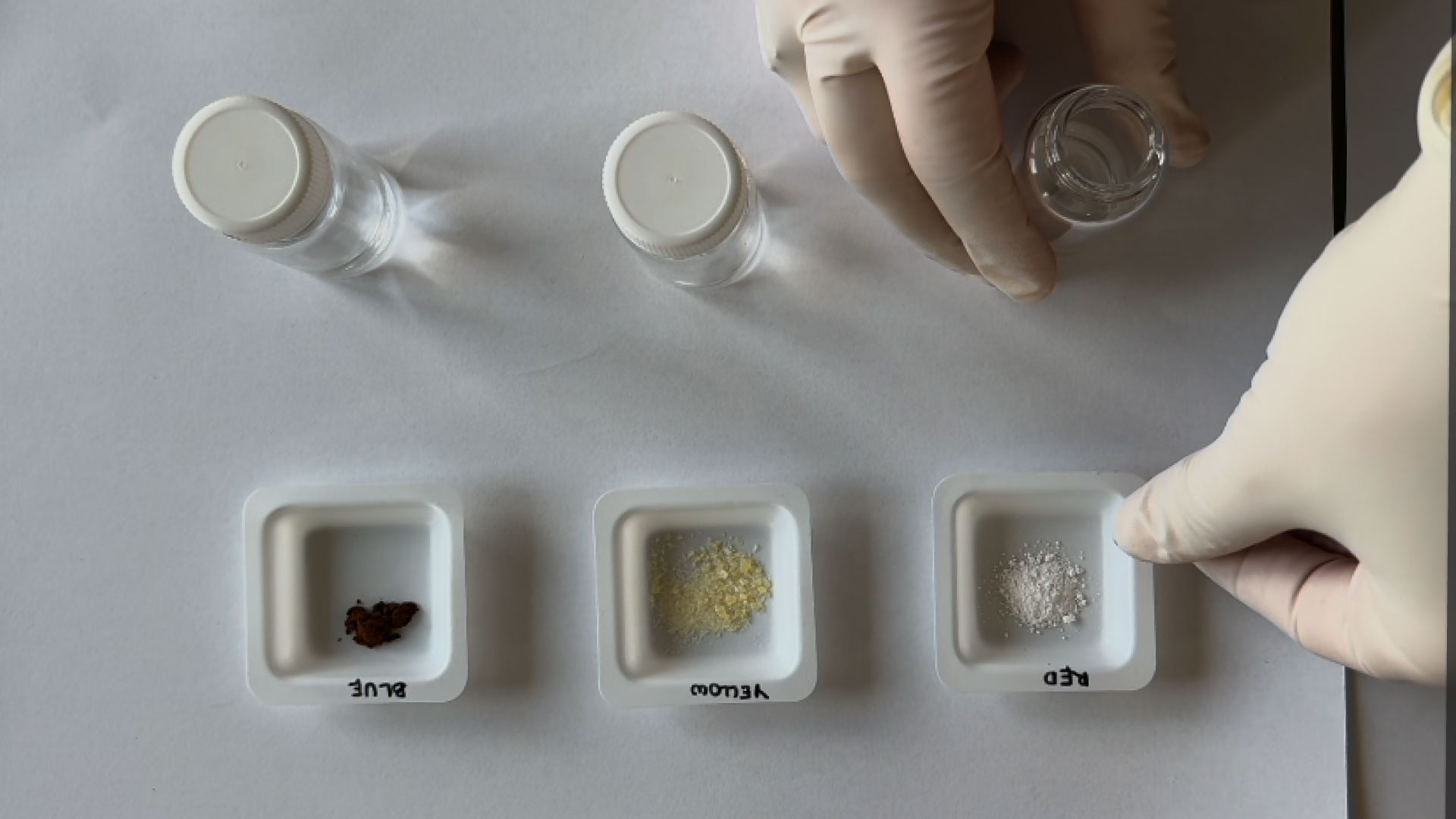
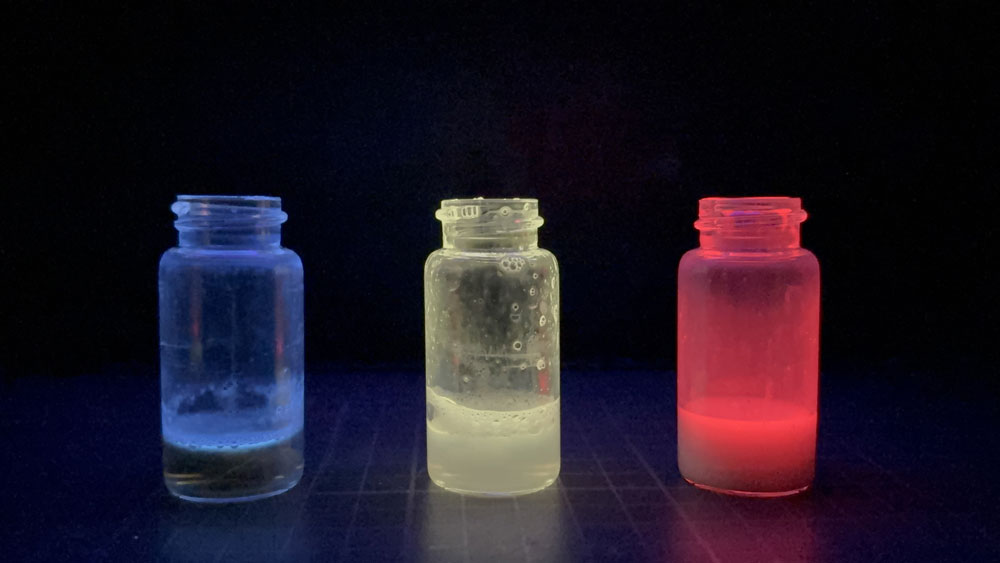
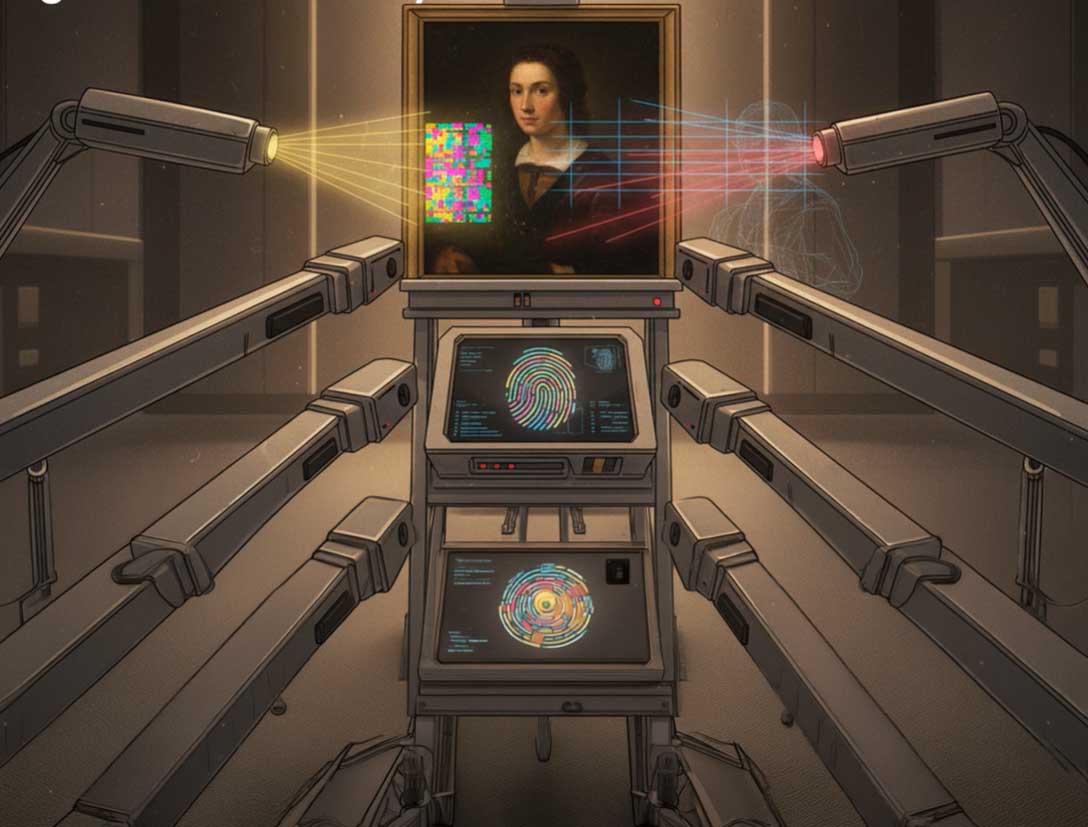
AURORA has developed and validated a new generation of photoluminescent chemical markers designed specifically for cultural heritage protection. The project explored three classes of advanced nanomaterials: carbon dots, zinc oxide quantum dots, and rare‑earth‑doped nanophosphors, each offering tunable optical responses ideal for secure, non‑invasive identification of artworks.
These materials were engineered into stable, high‑performance inks that remain completely invisible under normal lighting yet emit strong, wavelength‑specific fluorescence under UV illumination. Their formulation was optimised through dedicated synthesis processes, binder selection, and adhesion studies, ensuring compatibility with a wide range of heritage substrates.
To guarantee real‑world applicability, AURORA conducted extensive accelerated ageing tests, mechanical assessments, and substrate‑specific trials on mock‑ups representing metals, textiles, stone, wood, and paper. The results confirmed that long‑term stability and performance depend on the interaction between ink, binder, and material, leading to the creation of comprehensive guidelines for selecting the most suitable combinations.
Embedded Wireless Tracking & IoT Monitoring
AURORA has delivered a next‑generation Embedded Wireless Tracker (EWT) designed to enhance the security and preservation of cultural heritage objects through precise indoor localisation and continuous environmental monitoring. The system combines Ultra‑Wideband (UWB) positioning, multi‑sensor data acquisition, and ultra‑low‑power electronics to provide museums with a reliable, non‑intrusive tool for safeguarding their collections.
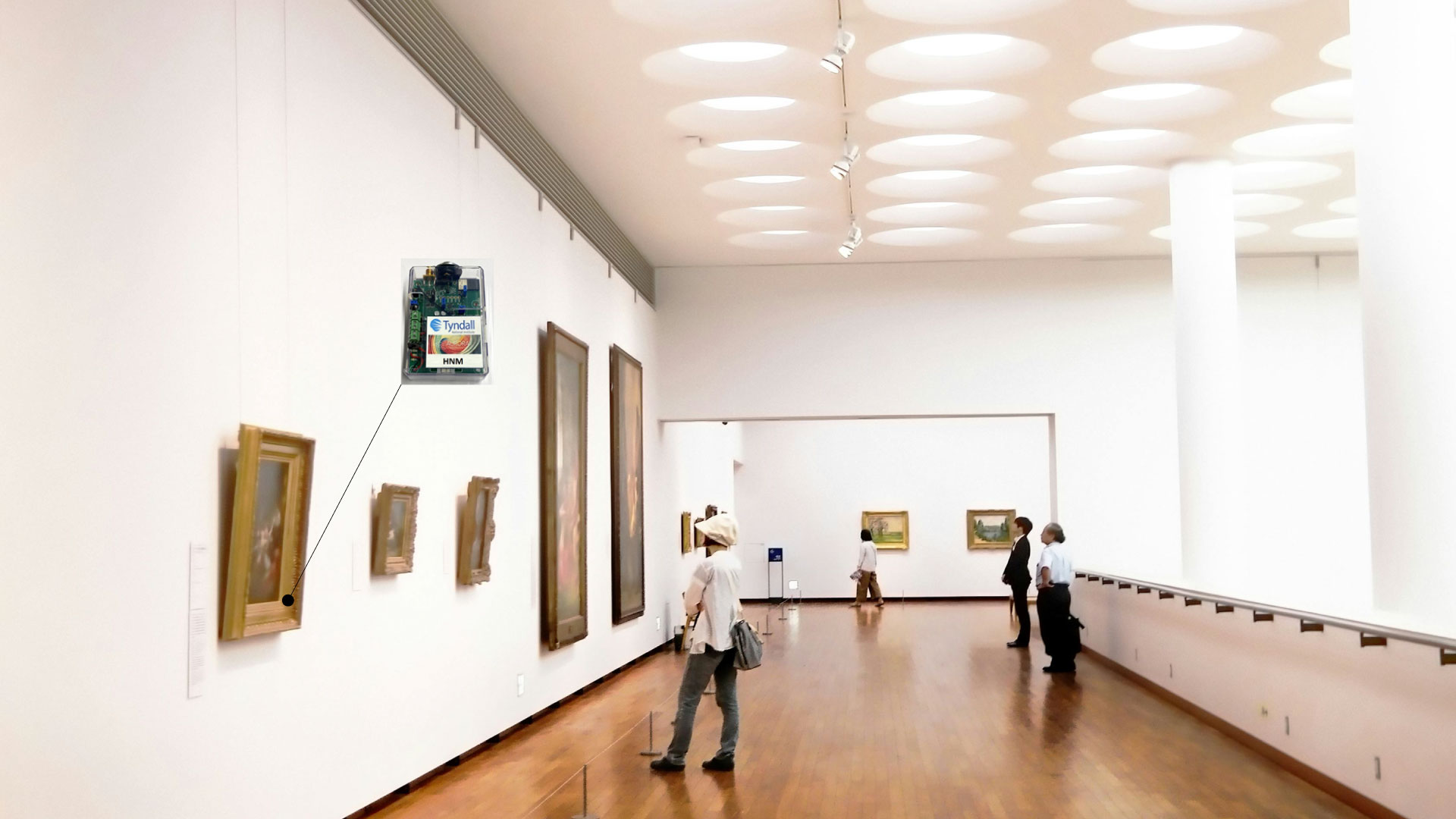
The project developed and validated an hardware. This compact design allows the tracker to be discreetly integrated inside or near sensitive artworks without affecting their display or conservation requirements.
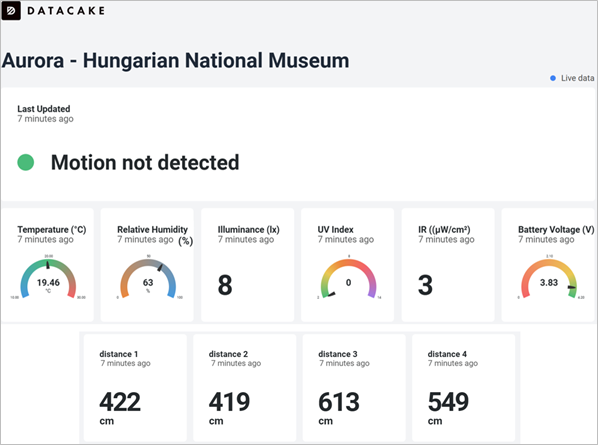
The EWT demonstrated centimetre‑level localisation accuracy and long‑term autonomy, with battery lifetimes of up to five years thanks to optimised power management, sleep‑mode operation, and innovative dual‑band antennas enabling wireless charging and wake‑up radio functionality. The system continuously monitors temperature, humidity, light, UV, IR, vibration, and battery status, transmitting data securely via LoRaWAN and The Things Network.
Real‑world deployments in museums in Ireland and Hungary validated the robustness of the system in operational environments. A dedicated dashboard enables staff to visualise live and historical telemetry, while automated alerts notify users when movement or environmental anomalies are detected.
Through this integrated solution, AURORA provides cultural institutions with a museum‑ready, sustainable, and highly accurate monitoring system that strengthens preventive conservation, enhances security, and supports the creation of digital identities for artworks.
System architecture for indoor localization and dataflow from Tag to the cloud
Digital Identity & Blockchain Platform
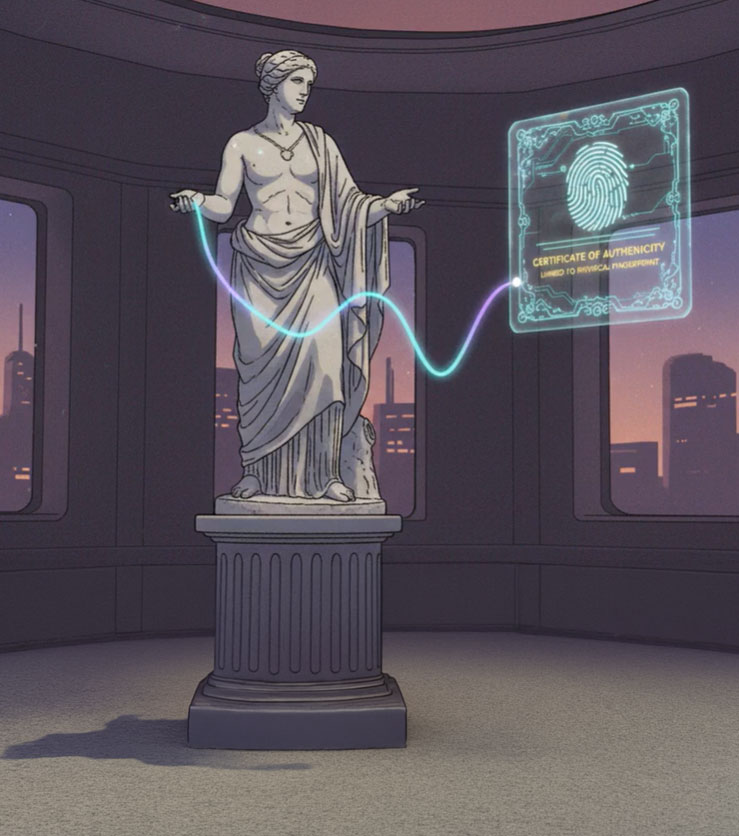
AURORA provides a ledger‑based digital identity system that assigns each artwork a unique, tamper‑proof blockchain record, ensuring authenticity, traceability, and secure lifecycle documentation. Mobile verification tools let authorised users confirm an object’s identity on site. The platform also integrates IoT telemetry: movement or anomalies detected by the wireless tracker trigger automatic alerts, while historical environmental data supports preventive conservation. Together, these features create a comprehensive, future‑ready solution for provenance tracking, risk mitigation, and responsible artwork management.
Environmental & Economic Impact Assessment
AURORA conducted a comprehensive Life Cycle Assessment (LCA) and Life Cycle Costing (LCC) to evaluate the environmental footprint and economic sustainability of its key technological components: photoluminescent inks, the Embedded Wireless Tracker, and the digital infrastructure supporting the platform. This dual assessment ensured that innovation was accompanied by responsible design choices, aligning the project with EU sustainability priorities.
On the economic side, the Life Cycle Costing study provided insights into production costs, scalability, and long‑term operational expenses, helping partners understand how the technologies could be adopted by museums and heritage institutions with limited resources. These findings support future decision‑making and guide the refinement of AURORA’s solutions toward more cost‑effective, low‑impact, and scalable implementations.
Field Validation & Real‑World Applications
AURORA’s technologies were extensively validated in real operational environments, demonstrating their effectiveness beyond laboratory conditions and confirming their readiness for adoption by museums and heritage institutions. The project tested its photoluminescent chemical markers and IoT tracking systems on a wide range of authentic cultural heritage materials, including artworks preserved in Ukrainian churches exposed to conflict‑related risks. These applications proved that the markers remain invisible under normal lighting, are safely detectable under UV, and can be applied without altering the integrity of fragile surfaces.
Field validation also extended to the digital identity platform, which was tested in conjunction with IoT telemetry to ensure seamless integration between blockchain‑based records and real‑world sensor data. This demonstrated the platform’s capacity to support provenance verification, risk detection, and preventive conservation workflows.
Dissemination, Publications & Knowledge Production
AURORA has produced a wide range of communication materials designed to make the project’s results accessible to diverse audiences, from museum professionals to policymakers and the general public. These outputs played a key role in raising awareness about the challenges of cultural heritage protection and in showcasing the innovative solutions developed by the consortium. AURORA has developed an extensive knowledge base that contributes to strengthening cultural heritage sector’s capacity to understand, prevent, and respond to risks such as illicit trafficking, environmental degradation, and conflict‑related threats.
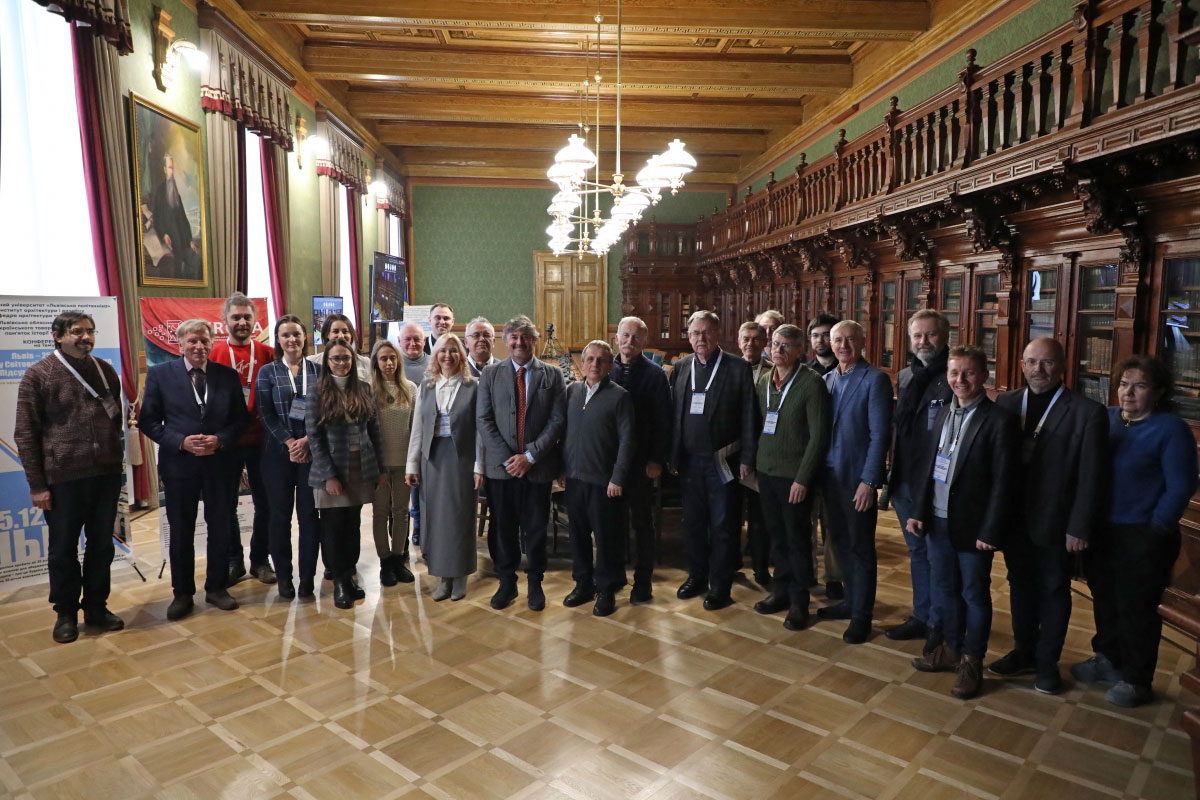
The project’s most substantial contribution is the international publication “From Risk to Response – How the Heritage Sector Addresses Illicit Trafficking”, which gathers 15 case studies from museums, archaeologists, academics, and heritage professionals worldwide. The volume includes contributions from sister projects ANCHISE and ENIGMA, as well as a case study from Lviv Polytechnic National University demonstrating the practical use of AURORA’s digital tools.
Results of the museum survey technological approaches explored in the project
How blockchain can support provenance, authenticity, and risk mitigation in the heritage sector
Training, Capacity Building & Community Engagement
AURORA has invested significantly in strengthening the skills, awareness, and preparedness of professionals working in cultural heritage protection. Through targeted training activities, round tables, and community‑focused events, the project ensured that its technological innovations were accompanied by real opportunities for learning and professional development.
A key achievement was the organisation of dedicated training sessions and workshops that introduced conservators, museum staff, and students to the practical use of AURORA’s chemical markers, IoT tracking systems, and digital identity platform. These activities helped participants understand how to integrate the tools into existing conservation workflows, from safe application protocols to UV‑based detection and digital verification.
Through these initiatives, AURORA contributed to building a more informed, skilled, and connected heritage community, ensuring that technological innovation is matched by human capacity and shared expertise.